
Pranjul Bhandari, Chief India Economist, HSBC, speaks about a range of issues ranging from inflation, to how Goods and Services Tax and land acquisition bills can help India hit double digit growth, and her impressions about economic growth in the last one year after Narendra Modi took over as India's Prime Minister.
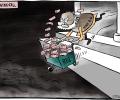
The windfall taxes on domestic crude oil production and fuel exports will generate close to $12 billion (Rs 94,800 crore) for the government in the remainder of the current fiscal while trimming profits of firms such as Reliance Industries Ltd and ONGC, Moody's Investors Service said Tuesday. On July 1, the government imposed windfall gain taxes on the export of petrol, diesel and aviation turbine fuel (ATF), and on the domestic production of crude oil. It has also mandated exporters to meet the requirements of the domestic market first.

Notwithstanding lower growth rates recorded in the first quarter (Q1) of 2023-24 (FY24), which spanned from April to June, footwear stocks have seen some gains in the past two trading sessions. Bata India saw an increase of approximately 5 per cent, driven by positive expectations surrounding a potential tie-up in the sports/athleisure segment. This development is viewed favourably due to the segment's higher growth rates.

Waves of foreign portfolio investments worth over Rs 51,000 crore splashed into the Indian market in 2021 as overseas investors turned net buyers of domestic securities for the third straight year while excess global liquidity and other factors steered the ebb and flow of their investing ways. With the global financial system still flush with liquidity, emerging market assets, especially equities, might well remain the preferred investment avenue for many more months to come, experts opined. As the equities sizzled during most of 2021, that also saw economy slowly coming back into the recovery path, Foreign Portfolio Investors (FPIs) turned net buyers but their investment is much less compared to net inflows of Rs 1.03 lakh crore in 2020.

The employment situation remains dire. Whatever can be done to promote greater low-skill employment should be pursued aggressively, advises former chief economic adviser Shankar Acharya.

'Over the next two quarters, markets will be guided by observing the earnings resilience of corporates during the second lockdown, progress of the monsoon and the damage, if any, to rural spending power due to the second wave.'

Assocham expressed concern over the precarious situation that the manufacturing sector is in, observing that if the trend does not reverse with monetary and fiscal measures it would be difficult for the industry to generate jobs.

Bolstered by improved domestic demand, India's services sector expanded for the fourth consecutive month in January as business activities quickened and rising business optimism is set to sustain the growth momentum, a monthly survey said on Wednesday. The seasonally-adjusted India Services Business Activity Index rose from 52.3 in December to 52.8 in January, pointing to a quicker expansion in output. The index was above the critical 50 mark that separates growth from contraction for the fourth month in a row during January.

The recovering valuations, will lead to enhanced optimism among investors about funding startups.
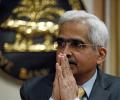
Uncertainty is emerging as the only certainty, said RBI Governor Shaktikanta Das as he emphasised on continued policy support at the December MPC meet during which members expressed concerns over spread of the Omicron variant of coronavirus, as per the minutes of the rate-setting panel released on Wednesday. After three days of deliberations, the six members of the Monetary Policy Committee (MPC) on December 8 unanimously voted for status quo on policy rates for the ninth consecutive time. At the meeting, the RBI Governor said risks stalking the global economy have amplified with rapid spread of the virus mutations, including the Omicron variant, leading to countries scrambling for restrictions.

India Inc resorted to salary cuts to protect their profits in the June quarter, as revenues came under pressure due to the second pandemic wave that affected nearly the entire country, a report said on Wednesday. The "weak" wage growth will prove to be a drag on the overall economic recovery in the medium term as it will affect household consumption, the report by India Ratings and Research said. An environment of pandemic-led uncertainty and elevated inflation could impact the level of spending and hence the overall demand, it said.

The stellar rise in corporate earnings in financial year 2021-22 (FY21) and FY22 did not result in a corresponding boom in capital expenditure (capex), with listed companies' investment in fixed assets rising just 2.3 per cent year-on-year (YoY) in FY22, growing at the slowest pace in the last six years. In comparison, the firms' combined net profit jumped 63.5 per cent YoY in FY22, while net sales increased 31.1 per cent - the fastest pace in over a decade. The 955 non-financial companies in Business Standard's sample reported combined net profit of Rs 7.18 trillion in FY22, compared with Rs 4.39 trillion in FY21 and Rs 2.59 trillion in FY20.

The new IIP series based on the new base year, is expected to lead to better capturing of ground data


'If because of El Nino, the monsoon is affected adversely in the current year, naturally it will affect income projections and consequently Budget numbers.'
'There are some high-frequency indicators where uptick is visible and some where it is not'

It said the money supply recovered to its pre-demonetisation level in mid-2017 and is now increasing steadily, similar to the previous trend.

A reading above 50 indicates expansion while a one below this level means contraction.

Over 10 million Indians have lost their jobs because of the second wave of COVID-19, and around 97 per cent of households' incomes have declined since the beginning of the pandemic last year, Centre for Monitoring Indian Economy (CMIE) chief executive Mahesh Vyas said on Monday. The unemployment rate measured by the think-tank is expected to come at 12 per cent at the end of May as against 8 per cent in April, Vyas told PTI, adding this signifies that about 10 million or 1 crore Indians have lost jobs in this period. Stating that the main reason for the job losses is "mainly the second wave" of COVID-19 infections, Vyas said, "As the economy opens up, part of the problem will be solved but not entirely."

In addition to new launches and restructuring across product segments, festival demand also aided growth.

In the mid-quarter review on December 18, the Reserve Bank left key policy rates unchanged but said it will hike interest rates if inflation does not subside.

'Today, there is no easy money to be made after the run-up in equities.'

Traditionally, food prices have been seasonal in nature.

Evidently, households see a brighter future after the Budget, reveals Mahesh Vyas.

If credit is not going to flow in response to a policy rate cut, while inflationary pressures, as well as expectations, may be stoked, a rate cut may not be appropriate at this point

Analysts are expecting inflation to fall further in October and November on base effect. Inflation measured by consumer prices has been trending down for over four months, and came in at 6.7 per cent in September.

The Consumer Price Index hit the lowest in six months in March at 4.83 per cent.

After navigating the turbulent pandemic waves, the recovering Indian economy is now sailing through unchartered waters of rising coronavirus cases, spiralling commodity prices and spiking inflation though the lighthouse of sustainable growth remains visible. As 2022 begins, a raft of developments, ranging from Budgetary announcements to continuation of stimulus measures to monetary policy, will set the tone for the domestic economy, which is projected to grow more than 9 per cent in the current fiscal ending March 2022. The country's continuing massive vaccination drive and 'precaution' doses starting for select categories of people this month will provide a firewall against any steep spike in coronavirus cases amid the emergence of the Omicron variant.

'If an investor is ready to stay put for the next five years, one can consider investing in mid- and small-cap funds, but through SIPs.'

Raghuram Rajan rejected the argument that inflation has come down largely because of "good luck" stemming from low oil prices.

'We believe there will be a full shutdown for four weeks and a partial shutdown for eight weeks.' 'Hence, economic activity is unlikely to normalise before the end of May.'

The Indian economy's election-year syndrome cannot be ignored, says A K Bhattacharya.

With crude and commodity prices ebbing and the twin deficits under check, the Reserve Bank should have cut the key policy rate to push investments and boost economic growth, India Inc said.

Rajan had overturned the majority opinion of the members and chose to hold the rates at the last monetary policy review in October.

The study highlights the critical need for people to comply with face mask use, social distancing, and other COVID-19 prevention guidelines as advised by the public health authorities.

Moody's rates India's outlook at stable.

Inflation based on the Wholesale Price Index cooled to a 5-year low of 1.77 per cent in October driven by softening prices of fuel and food items.

'The Indian economy is in slowdown and growth may stay slow,' notes Devangshu Datta.
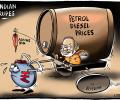
Retail inflation inches up to 3.77%; IIP growth dips to 3-month low

'We will likely be buffeted by tailwinds from the global economy, geopolitical shifts and robust domestic demand.'
